Slow Down, Glow Up: Why Americans Are Turning Japanese Skincare Rituals Into Their Nightly Meditation
It usually starts with a YouTube rabbit hole at 11pm. Someone stumbles onto a video of a Tokyo-based beauty enthusiast carefully layering toners, essences, and serums with the calm focus of someone performing a tea ceremony. The comment sections are always full of the same thing: I didn't know skincare could feel like this.
That feeling — unhurried, intentional, almost meditative — is exactly what's driving the explosion of Japanese-inspired multi-step skincare routines across the US. And if you look a little closer, it's not really about the products at all.
More Than a Beauty Trend
American skincare culture has historically been pretty utilitarian. Splash some water, swipe on a moisturizer with SPF, and get out the door. Efficiency was the whole point. So when Japanese and Korean beauty philosophies started gaining traction here — routines that could involve anywhere from six to twelve distinct steps — a lot of people initially dismissed it as excessive.
Then something shifted.
"I think people started realizing they weren't just shopping for better skin," says Maya Thornton, a skincare content creator based in Austin with over 400,000 followers across her platforms. "They were shopping for a reason to slow down. That's the real product being sold here."
Maya started incorporating Japanese skincare principles about three years ago after burning out hard from a demanding marketing job. She'd read about the Japanese concept of teinei — a word that loosely translates to doing things with care and thoroughness — and it reframed the whole routine for her. "Once I stopped thinking of it as a chore and started treating it like something I was giving myself, everything changed."
What the Routine Actually Looks Like
For the uninitiated, a Japanese-influenced skincare routine typically builds in deliberate layers. It might start with an oil cleanser to break down makeup and sunscreen, followed by a foaming cleanser, then a softening lotion (not what Americans typically think of as lotion — more like a prep toner), an essence, one or two targeted serums, a sheet mask a few nights a week, eye cream, moisturizer, and a facial oil to seal everything in.
Each step has a purpose. Each product is applied with gentle, upward motions. There's a pace to it.
Dermatologist Dr. Rachel Kim, who practices in Chicago and has seen a notable uptick in patients asking about layering techniques, says the science largely supports the approach. "The Japanese philosophy of building hydration in multiple thin layers rather than one thick application is genuinely effective for the skin barrier," she explains. "But what I find fascinating clinically is how many patients tell me their anxiety decreases when they stick to the routine. There's a real mind-skin connection happening."
That connection isn't accidental. Japanese beauty culture has long understood that the act of caring for your skin is inseparable from caring for your mental state. The ritual is the point.
The Overwhelm Antidote Nobody Saw Coming
America in the 2020s is, to put it mildly, a lot. Between the always-on work culture, the relentless scroll of social media, and the general ambient stress of modern life, people are desperate for small anchors in their day. Something that belongs entirely to them.
That's where the ten-step routine found its moment.
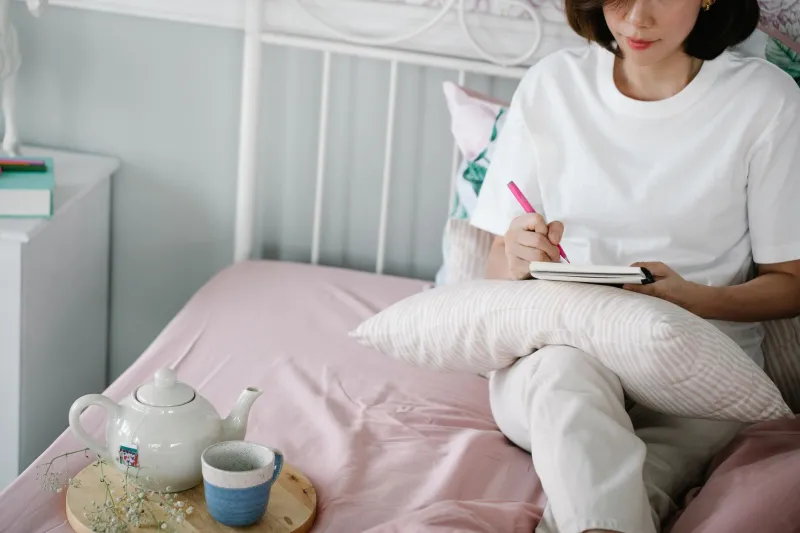
Jordan Ellis, a 34-year-old nurse in Portland, Oregon, started her Japanese skincare practice during a particularly brutal stretch of pandemic-era shifts. "I needed something that was just mine. Something that had a beginning and an end," she says. "Those fifteen minutes before bed became sacred to me. I wasn't a nurse or a mom or anyone's anything. I was just taking care of my own face."
This sentiment comes up again and again in online communities dedicated to Japanese beauty. The routine functions less like a beauty regimen and more like a wind-down ceremony — a physical signal to the nervous system that the day is officially over.
Some practitioners have even started pairing their routines with other Japanese-influenced calming habits: playing soft ambient music, lighting incense, or practicing a few minutes of quiet breathing before they begin. The skincare ritual becomes the anchor for a broader intentional evening.
The Products Leading the Charge
Japanese beauty brands that were once only accessible through specialty importers or the occasional Japantown shop have become increasingly mainstream in the US. Brands like Hada Labo, DHC, SK-II, and Tatcha now sit comfortably on Sephora shelves and dominate Amazon's beauty bestseller lists. The appeal is consistent: clean formulations, thoughtful textures, and a philosophy that prioritizes long-term skin health over overnight transformations.
"Japanese skincare tends to be less aggressive than a lot of American products," Dr. Kim notes. "There's a cultural preference for gentle, cumulative results rather than dramatic quick fixes. For a lot of my patients who've struggled with sensitivity or irritation from harsher actives, this approach has been genuinely healing."
The ingredients tell the same story. Hyaluronic acid, fermented rice water, green tea extract, camellia oil — many staples of Japanese formulations have deep roots in traditional Japanese wellness practices. Using them feels like a small thread connecting modern life to something older and quieter.
Permission to Take Your Time
Maybe what the Japanese skincare boom is really giving Americans is something that doesn't come naturally to us: permission. Permission to spend twenty minutes on yourself without justifying it as productivity. Permission to move slowly and deliberately. Permission to treat the ordinary act of washing your face as something worth doing well.
In Japan, there's a word — kodawari — that describes an almost obsessive dedication to doing something with precision and care, no matter how small that thing might seem. It's the philosophy behind the sushi chef who trains for a decade before touching a piece of fish. It applies just as naturally to the woman in her bathroom in Osaka who has been applying her essence in careful, pressing motions for thirty years.
Americans are borrowing that energy, and honestly? Our faces — and our nervous systems — are better for it.
So if you've been eyeing that seven-step routine and wondering whether it's worth the time, here's the thing: the time is the point. Put on something calming, clear off your bathroom counter, and give yourself fifteen minutes that belong entirely to you. Japan figured out a long time ago that the way you take care of yourself matters just as much as that you take care of yourself.
The glow is just a bonus.