Nothing Lasts Forever — And That's Actually the Point: How Mono No Aware Is Changing the Way Americans Live

There's a specific kind of ache you feel when summer officially ends. Or when you scroll back through photos from a trip you'll never be able to recreate exactly. Or when you realize your favorite local coffee shop has quietly closed. It's not quite sadness. It's not nostalgia, exactly. It's something softer and more complicated than either of those things.
The Japanese have a name for that feeling: mono no aware (物の哀れ). Loosely translated, it means "the pathos of things" — a bittersweet awareness of impermanence that doesn't just tolerate life's fleeting nature but actually finds it beautiful. And right now, in the middle of a cultural moment defined by burnout, anxiety, and the relentless pressure to optimize every corner of your existence, this ancient Japanese aesthetic principle is resonating with Americans in a way that feels almost urgent.
What Mono No Aware Actually Means (And What It Doesn't)
The concept dates back to 18th-century Japanese literary scholar Motoori Norinaga, who used it to describe the emotional core of classical Japanese literature. Think cherry blossoms — celebrated not despite the fact that they fall within two weeks, but because of it. The transience is the whole point. The beauty and the brevity are inseparable.
But here's what mono no aware is not: it's not nihilism, and it's not giving up. It doesn't mean nothing matters because everything ends. It's closer to the opposite — things matter more precisely because they don't last. That subtle but crucial distinction is where a lot of Americans are finding their footing right now.
"People come into my office absolutely exhausted by the pressure to make everything permanent and perfect," says one licensed therapist based in Portland who works primarily with clients in their late 20s and 30s. "A relationship has to be 'the one.' A job has to be a 'forever career.' A home has to be the 'forever home.' When I introduce the idea that impermanence isn't a failure — it's actually the nature of everything — something visibly shifts for people."
The Five-Year Plan Is Having a Midlife Crisis
For generations, American culture has sold a very specific story: set your goals, build your plan, execute relentlessly, and arrive at a permanent destination called Success. The five-year plan was practically a rite of passage — in job interviews, in relationships, in therapy sessions of a different kind.
But something cracked in that narrative. The pandemic accelerated it, sure, but the fractures were already there. Millennials watched their carefully constructed timelines get demolished by student debt, a housing market that felt like a prank, and careers that pivoted — involuntarily or not — more times than their parents ever expected to pivot in a lifetime.
Gen Z, for their part, arrived already skeptical. They watched the generation before them grind toward benchmarks that kept moving. Many of them decided, fairly early, that the traditional roadmap wasn't theirs to follow.
What's filling that vacuum? For a growing number of people, it's a more fluid, present-tense way of moving through life. And mono no aware fits that shift almost perfectly.
"I stopped making five-year plans about two years ago," says Danielle, 31, a UX designer in Austin who discovered the concept through a Japanese literature podcast. "Now I make what I think of as 'season plans.' What do I want this chapter to feel like? What am I okay with it becoming, even if it becomes something different? It sounds small, but it completely changed my relationship with my own life."
Social Media, Impermanence, and the Irony Nobody's Talking About
Here's a weird paradox: we live in the most documented era in human history, and we're also more anxious than ever about things slipping away. Every meal gets photographed. Every milestone gets archived. We screenshot conversations, save Instagram posts, and curate our digital selves with an almost archaeological precision — as if we can hold onto experiences by cataloguing them hard enough.
Mono no aware pushes back against that impulse, gently but firmly. It suggests that the attempt to freeze moments might actually be what's making them feel hollow. That the cherry blossom you stopped to photograph might have given you more if you'd just stood under it for an extra minute and let it fall.
This is showing up in interesting ways online. There's a growing micro-movement of creators — particularly on TikTok and Substack — who are deliberately making ephemeral content. Unedited videos. Posts without captions. Writing that doesn't try to be evergreen. The aesthetic is intentionally unpolished, almost antiarchival. Some of them reference wabi-sabi or kintsugi (concepts that have already found their audiences in the US), but a quieter thread running through many of them is something that looks a lot like mono no aware — a comfort with the idea that the thing they're making doesn't need to last.
How It Shows Up in Everyday Life
You don't have to read 18th-century Japanese poetry to bring this philosophy into your daily life. In fact, the most compelling thing about mono no aware is how naturally it maps onto ordinary American experiences once you know what you're looking for.
In relationships: Instead of demanding that every connection fit a predetermined mold or timeline, some people are learning to appreciate relationships for what they are in the present — including ones that aren't built to last forever. A friendship that was intense for two years and then naturally faded isn't a failure. It was its own complete thing.
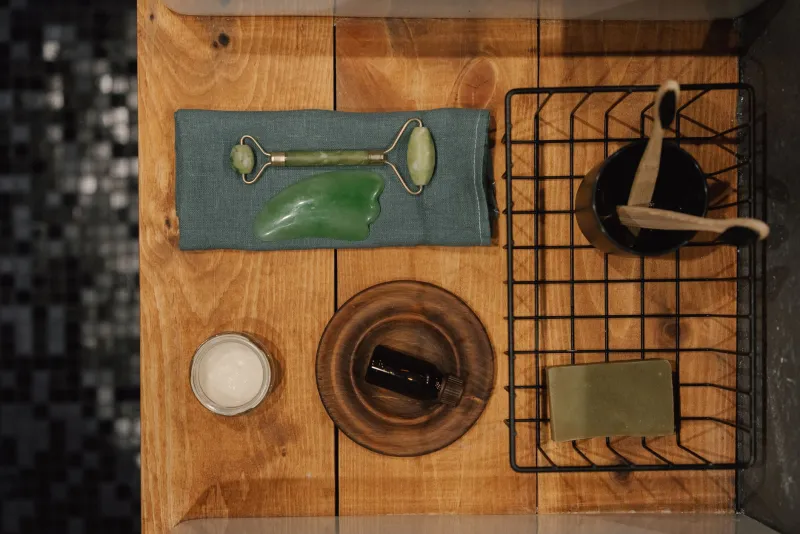
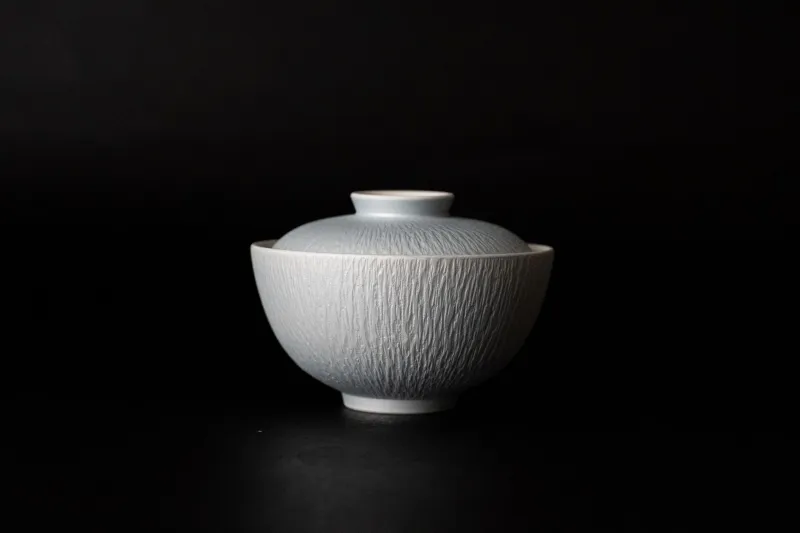
In your home: The Lifestyle & Design world has been quietly absorbing this idea for a while now. Interiors that embrace worn textures, natural materials that age visibly, and spaces that aren't staged for a photoshoot but lived in genuinely — all of this carries the fingerprints of mono no aware. Things are allowed to change. Patina is welcome.
In your career: The idea of a "portfolio career" — a working life made up of different chapters, skills, and roles rather than a single linear climb — maps surprisingly well onto this philosophy. Your career doesn't have to be a monument. It can be a series of seasons.
In your creative work: Perfectionism is, at its core, a refusal to accept impermanence. The thing you're working on will never be exactly right, so you keep adjusting it, holding it hostage from the world. Mono no aware is an argument for releasing it anyway — finished or not, perfect or not — because it belongs to a moment, and that moment won't wait.
A Different Kind of Radical
In a culture that celebrates disruption, hustle, and the relentless pursuit of more, there's something genuinely countercultural about sitting with the fact that everything is temporary — and finding that comforting rather than terrifying.
Mono no aware isn't asking you to be passive or to stop caring about things. It's asking you to hold what you care about a little more lightly. To let the cherry blossoms be beautiful and let them fall. To build something meaningful without needing it to be permanent. To live in a way that's less about arriving and more about actually being present for the journey — even the parts that don't make it into the highlight reel.
Maybe especially those parts.
The quiet revolution isn't loud. It doesn't have a manifesto or a merch line (yet). But it's showing up in therapy rooms, in design choices, in the way people are talking about their jobs and their relationships and their feeds. And for a generation that grew up being told that success meant permanence, the idea that impermanence might actually be the whole point? That's not a consolation prize.
That's a completely different way of being alive.