Delete Half Your Apps: How the Japanese Principle of Kanso Is Fixing Our Broken Relationship With Screens
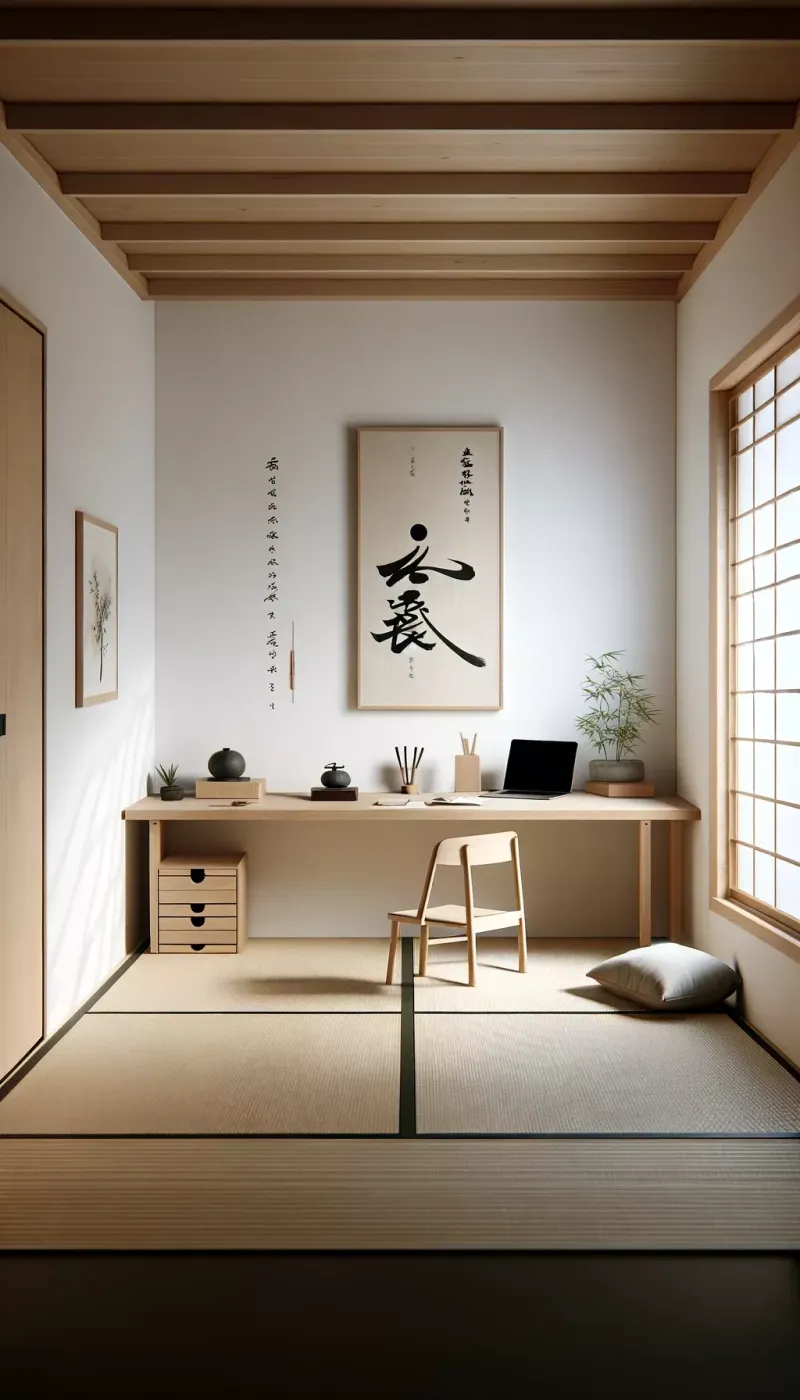
Photo: minimalist Japanese desk setup with single plant and clean phone screen, via i.pinimg.com
Open your phone right now. Go ahead. Count the apps on your home screen. Now count your unread notifications. Now think about the last time you sat with a cup of coffee and just drank the coffee — no scrolling, no half-watching a video, no texting someone back while pretending to relax.
If that last part made you uncomfortable, you're not alone. Americans are living in a state of permanent digital overstimulation, and most of us have quietly accepted it as the cost of modern life. But here's the thing: Japan has been pushing back on this kind of chaos for centuries, long before smartphones existed. The principle is called kanso, and it's having a quiet, powerful moment in American culture right now.
What Kanso Actually Means
Kanso is one of seven core principles in Zen-influenced Japanese aesthetics, a design philosophy that also gives us concepts like wabi-sabi and ma. Translated roughly as "simplicity" or "elimination of clutter," kanso isn't about having less for the sake of looking minimal. It's about removing anything that doesn't serve a clear purpose — so that what remains can actually breathe.
You see it in traditional Japanese architecture, where a single scroll painting in a tokonoma alcove carries more visual weight than an entire gallery wall of Western art. You feel it in Japanese interior design, where negative space is treated as an active element rather than an absence of decoration. The idea is that clutter — visual, physical, or mental — competes for your attention and dilutes your experience of everything around you.
Now apply that logic to your phone's home screen, your email inbox, or the seventeen browser tabs you have open right now.
The Digital Clutter Nobody's Talking About
We've gotten pretty good at talking about physical minimalism. Marie Kondo had an entire Netflix moment. Capsule wardrobes trended on TikTok. People started buying fewer things and feeling genuinely better for it. But somewhere along the way, we forgot to apply the same scrutiny to our digital environments.
The average American has 80 apps installed on their phone, according to data from App Annie, and actively uses fewer than 10 of them. Meanwhile, push notifications interrupt us an average of 80 times per day. That's a constant low-grade alarm system running in the background of your life, pulling your focus every few minutes whether you realize it or not.
This is exactly the kind of noise kanso was built to cut through — not with dramatic gestures, but with intentional, quiet elimination.
What Kanso Looks Like on a Screen
Applying kanso to your digital life isn't about going off-grid or deleting social media in a moment of frustration only to reinstall it three days later. It's about making deliberate choices about what earns space in your attention.
Start with your home screen. In traditional Japanese design, the tokonoma — that small, carefully curated display alcove — holds only what's meaningful. Treat your home screen the same way. Move everything off it except the four or five apps you genuinely use every single day. Everything else lives in a folder or gets deleted. The friction of searching for an app you rarely need is actually a feature, not a bug. It gives you a beat to decide if you really want to open it.
Audit your notifications ruthlessly. Go into your settings right now and turn off notifications for every app that isn't actively time-sensitive. Email doesn't need to buzz you. Instagram doesn't need to tell you someone liked a photo from two days ago. Kanso asks: does this serve you, or does it just create noise? If it's noise, it goes.
Embrace the empty inbox — or at least the emptier one. Japanese design principles value the clarity of a clean surface. An inbox with 4,000 unread emails isn't a to-do list; it's visual anxiety. Spend one afternoon unsubscribing from every newsletter you delete without reading. Use a tool like Unroll.me if you need to. Then keep up with it. The goal isn't inbox zero as a productivity hack — it's inbox calm as a design philosophy.
Create device-free zones and times. Kanso isn't just about objects; it's about experiences. In many traditional Japanese homes, certain spaces are kept deliberately simple and quiet. You can do the same. The bedroom is an obvious one. So is the dinner table. Pick one room, one time of day, and keep your screen out of it.
Why This Feels So Hard in America
Here's the honest part: American tech culture is almost perfectly designed to resist kanso. Apps are built to maximize your time inside them. Notifications are engineered to feel urgent. The entire attention economy runs on the premise that your focus is a resource to be harvested — and it's been remarkably successful at that.
But there's a growing backlash. The same millennial and Gen Z users who drove app downloads to record highs are now leading the "digital minimalism" movement, citing burnout, anxiety, and the creeping sense that they're consuming content without actually enjoying any of it. Kanso gives that feeling a framework and a name.
It also reframes the conversation. This isn't about willpower or being anti-technology. It's about design. When you approach your digital environment the same way a Japanese architect approaches a room — with intention, restraint, and respect for what each element is actually doing — the result feels different. Calmer. More yours.
One Week of Kanso
If you want to try this without overhauling everything at once, here's a simple starting point:
- Day 1: Delete every app you haven't opened in 30 days.
- Day 2: Turn off all non-essential notifications.
- Day 3: Clear your home screen down to your most-used apps only.
- Day 4: Unsubscribe from 20 email lists.
- Day 5: Set your phone to grayscale for the day. (It sounds strange, but color is part of what makes apps visually addictive.)
- Day 6: Designate one hour with no screens at all.
- Day 7: Sit with how it feels.
Kanso isn't a one-time purge. It's a practice — the same way keeping a home clean is a practice. But once you start seeing your digital life as a designed space that deserves the same thoughtfulness as your living room, it's hard to go back to the noise.
Your attention is worth protecting. Kanso has known that for centuries.