Your Relationship Doesn't Need to Be Perfect — It Needs to Be Real: The Wabi-Sabi Approach to Modern Love
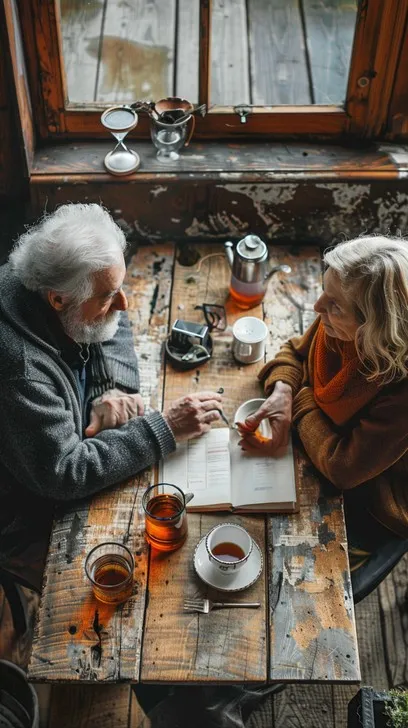
Photo: couple having honest conversation over coffee in cozy imperfect home, via images.stockcake.com
Somewhere between the Pinterest wedding boards and the couples-goals TikToks, a lot of Americans started believing that a good relationship should look a certain way. Coordinated outfits at brunch. Synchronized sleep schedules. Arguments that resolve neatly in 24 hours. A shared aesthetic. A shared vision. A shared everything.
And when their actual relationship — the one with miscommunication and bad timing and two people who grew up in completely different households trying to figure out how to share a bathroom — didn't match that image, they started to wonder if something was wrong with them.
Nothing is wrong with them. But something might be wrong with the standard.
Enter Wabi-Sabi
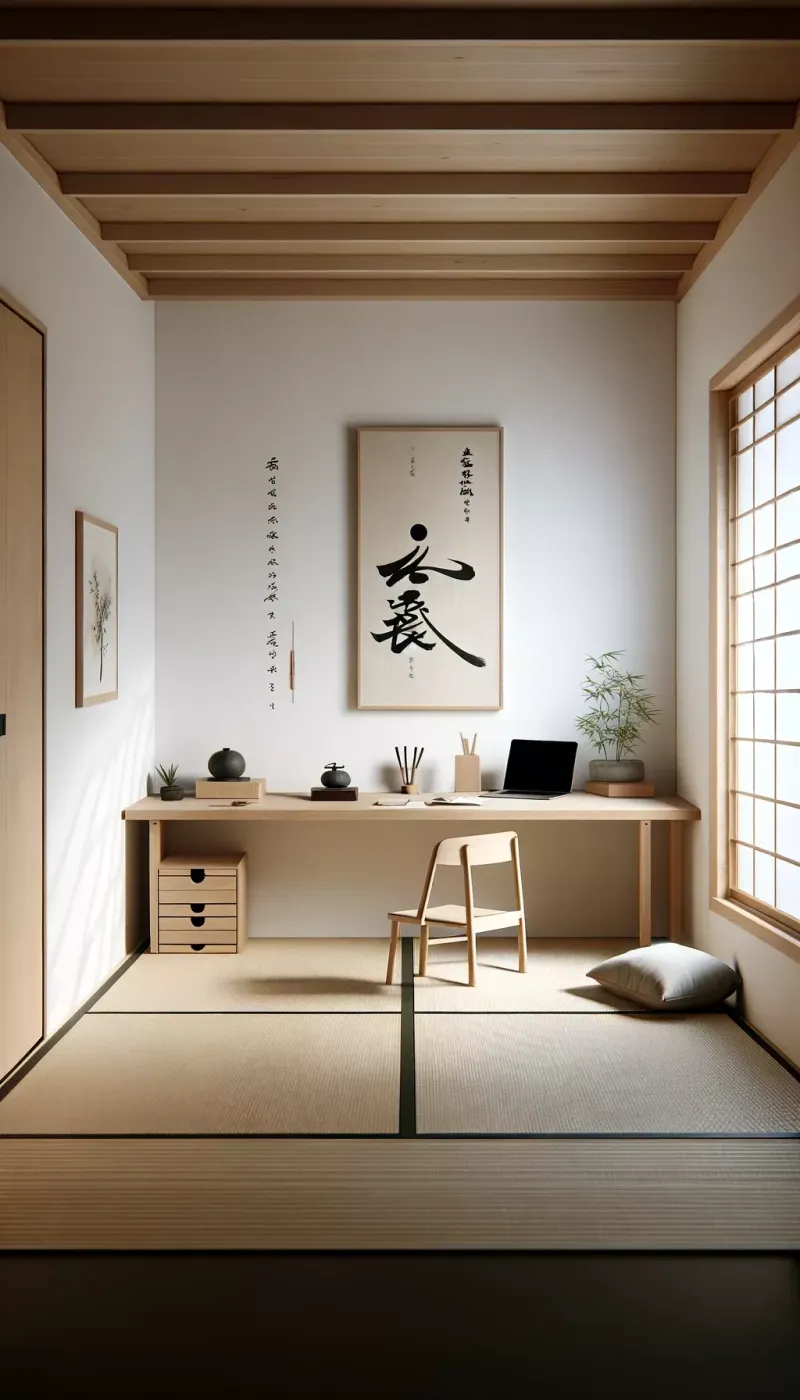
Wabi-sabi is a Japanese aesthetic philosophy rooted in Zen Buddhism, and it's one of those ideas that sounds simple until you really sit with it. At its core, it's the practice of finding beauty in things that are imperfect, incomplete, or impermanent. A ceramic bowl with a crack running through it. A garden that's slightly overgrown. A face with laugh lines. A friendship that went through a rough patch and came out the other side.
In Japanese art and design, wabi-sabi pushes back against the Western obsession with polish and symmetry. There's a concept called ma — the meaningful space between things — and wabi-sabi lives in that space. It says: the crack is part of the story. The roughness is where the character lives. Perfection isn't the goal; authenticity is.
Now imagine applying that lens to your love life.
The Instagram Relationship Is a Fantasy — and We All Know It
Millennials and Gen Z grew up watching relationships perform for audiences. Social media didn't just document romance; it created a competitive category for it. Couples started optimizing their relationships for external validation rather than internal satisfaction, and the gap between the curated version and the lived version got wider and wider.
Research backs this up. A 2023 study from the University of Pennsylvania found that heavy social media use correlates with higher relationship dissatisfaction — not because people's relationships are worse, but because the comparison standard has become completely untethered from reality. You're not comparing your Tuesday evening to your partner's Tuesday evening. You're comparing it to someone else's most photogenic Saturday.
Wabi-sabi offers a direct antidote to that. It doesn't just tolerate imperfection — it actively values it as a marker of something real.
What Wabi-Sabi Relationships Actually Look Like
A wabi-sabi approach to love isn't passive or resigned. It's not "I'll just accept whatever because nothing's perfect." It's more discerning than that. It asks: what kind of imperfections are you willing to treasure?
Mismatched rhythms. One of you is a morning person. One of you is not. In the perfect-relationship fantasy, this gets smoothed out. In a wabi-sabi relationship, you figure out how to honor both — the early riser makes coffee and reads quietly; the night owl gets a peaceful hour alone before bed. The mismatch becomes a feature of how you've built something together, not a flaw to fix.
The difficult conversation you keep having. Every long-term relationship has a recurring argument. Money. Family boundaries. Different communication styles. The wabi-sabi view doesn't see this as a sign that you're incompatible — it sees it as the rough texture of two people with genuine inner lives trying to build something shared. The conversation itself, over time, becomes part of your story.
The version of each other that isn't Instagram-ready. Sick days. Career setbacks. The phase where someone is in therapy and kind of difficult to be around. Wabi-sabi says: this is where love actually happens. Not in the highlight reel, but in the unglamorous, unphotographed middle of things.
Growth that looks messy from the outside. People change. Interests shift. Ambitions evolve. A relationship that accommodates that growth — even when it's uncomfortable — is more durable than one built on a static idea of who both people are supposed to be.
Why This Is Resonating Right Now
There's something interesting happening in dating culture among younger Americans. After years of optimizing — swiping, filtering, ghosting anyone who didn't immediately feel like a 10/10 — there's a growing exhaustion with the whole project. Dating app usage has plateaued. Relationship therapists report an uptick in clients who aren't in crisis but are asking deeper questions: What am I actually looking for? What does a good relationship feel like from the inside rather than the outside?
Wabi-sabi is showing up in those conversations, sometimes by name and sometimes just as a sensibility. People are talking about wanting relationships that feel "lived-in." They're describing compatibility in terms of ease and honesty rather than aesthetics and alignment. They're valuing partners who show up imperfectly but consistently over partners who perform perfectly but superficially.
This is wabi-sabi thinking, even when people don't have a word for it.
Bringing This Into Your Own Relationship
You don't need to overhaul anything. Wabi-sabi is a shift in perception more than a change in behavior. But here are a few places to start:
Stop benchmarking your relationship against other people's. Seriously. Other couples' social media presence tells you almost nothing useful about what's actually working in their relationship. Your relationship is its own thing, with its own texture and its own strengths.
Reframe 'problems' as 'material.' The things that are hard between you and your partner — the friction points, the recurring disagreements, the differences in how you process emotion — these are the raw material of intimacy. Working through them is the relationship. Avoiding them is just postponing it.
Let yourself be seen imperfectly. Wabi-sabi only works if both people are willing to show up as they actually are. That means being honest about bad days, uncertain feelings, and the parts of yourself that aren't fully figured out yet. The vulnerability is the point.
Appreciate the patina. In Japanese aesthetics, an object that shows its age and use is considered more beautiful, not less. The same applies to a relationship that's been through something. The history is the value.
The perfect relationship doesn't exist. But a real one — worn in, worked on, honest about its cracks — might be something even better.