What If Your Hobby Isn't Supposed to Make Money? The Ikigai Shift That's Quietly Saving Millennials From Themselves
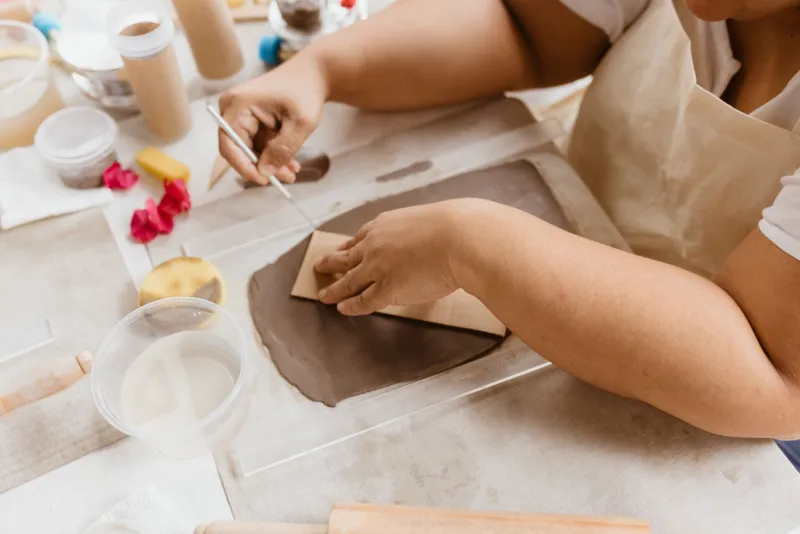
Somewhere between the third Etsy listing and the first sponsored Instagram post, Priya realized she no longer liked making ceramics.
She'd started throwing pots in her late twenties as a way to decompress after long days at her marketing job in Chicago. The clay was tactile and forgiving, and for the first time in her adult life, she was doing something purely because it felt good. Then her friends started complimenting her work. Then someone offered to buy a bowl. Then came the online shop, the pricing spreadsheets, the customer emails, the shipping supplies stacked in her hallway.
"Within a year, ceramics felt like my second job," she says. "Except I still had my first job. I'd essentially taken the one thing that made me feel free and turned it into an obligation."
Priya's story isn't unusual. It's practically a generational archetype.
The Hustle Culture Trap Nobody Warned Us About
Millennials came of age during an era that aggressively sold them two contradictory ideas: follow your passion, and always be monetizing. The result was a cultural pressure to turn every creative interest into a revenue stream — to justify leisure by making it productive.
Cooking became a food blog. Photography became a freelance side gig. Journaling became a newsletter with a Substack subscription tier. The language of entrepreneurship colonized the vocabulary of personal joy.
And for a while, it felt empowering. Having a side hustle meant you were resourceful, ambitious, ahead of the curve. But a decade into that experiment, the emotional invoice is coming due. Burnout rates among millennials are among the highest ever recorded. Creative hobbies, once a source of restoration, have become another performance metric.
Enter ikigai — and a very different way of thinking about what a life well-lived actually looks like.
What Ikigai Is (And What It Isn't)
The Japanese concept of ikigai — roughly translated as "reason for being" or "that which makes life worth living" — has been popularized in the West through a Venn diagram framework: the intersection of what you love, what you're good at, what the world needs, and what you can be paid for.
That diagram, it's worth noting, is largely a Western adaptation. In Japan, ikigai is a more personal, quieter concept. It doesn't require you to monetize anything. It doesn't demand that your purpose be marketable or scalable. For many Japanese people, ikigai might be as simple as tending a garden, watching grandchildren grow, or maintaining a daily ritual that brings quiet satisfaction.
The Western version accidentally smuggled in the very productivity pressure ikigai was meant to dissolve.
"When people come to me burned out on their side hustles, I ask them to go back to the original question," says a life coach in Seattle who works primarily with millennial professionals. "Not 'what can I get paid for?' but 'what makes you feel most like yourself?' Those are very different questions, and the answers rarely overlap."
Walking It Back: Stories From People Who Quit the Hustle
For Priya, the turning point came when she closed her Etsy shop and gave herself a six-month ban on selling anything she made. "I had to actively retrain myself to make things that would never be for sale. It felt almost transgressive at first. Like, what's the point?"
That question — what's the point if there's no output? — is itself a symptom of hustle culture's deepest damage. The idea that experience only counts if it produces something shareable, sellable, or scalable.
Jordan, a 36-year-old software engineer in Brooklyn, had a similar reckoning with music. He'd been playing guitar since high school, but after trying to build a SoundCloud following and pitch himself to local venues, he stopped playing entirely for almost two years. "It started feeling like rejection and metrics. Music became something I was failing at, instead of something I loved."
He rediscovered ikigai — his specific, personal version of it — through a conversation with a Japanese colleague who described playing shamisen purely for himself, with no audience and no ambition beyond the practice itself. "That reframing hit me hard. I didn't have to do anything with music except play it."
Jordan now plays for about thirty minutes every morning before work. He's posted nothing. He's earned nothing. "It's the most important thirty minutes of my day."
The Radical Act of Unprofitable Joy
There's something almost rebellious, in the current cultural climate, about doing something well and keeping it entirely to yourself. No content. No monetization. No personal brand extension.
This is actually closer to the original spirit of ikigai than most Western interpretations allow. Japanese psychologist Michiko Kumano has described ikigai as being deeply connected to subjective well-being — a sense of meaning that comes from within, not from external validation or financial return.
The research backs this up. Studies on intrinsic versus extrinsic motivation consistently show that introducing financial reward for an activity people already enjoy tends to reduce their long-term engagement with it — a phenomenon psychologists call the "overjustification effect." In other words, paying yourself to do what you love can literally make you love it less.
Which raises an uncomfortable question for anyone with a monetized hobby: did the hustle take something from you that the paycheck never quite covered?
Reclaiming the Unprofitable Parts of Yourself
Returning to an ikigai-rooted relationship with your interests doesn't mean abandoning financial ambition or quitting your actual job. It means creating a protected space in your life for pursuits that exist entirely outside the economy of productivity.
Practically, that might look like:
- Setting a deliberate 'no-sell' rule for at least one creative practice, no matter how good you get at it
- Removing metrics — follower counts, engagement rates, sales figures — from anything that started as a hobby
- Asking the ikigai question differently: not "what can this become?" but "what does this give me right now, in this moment?"
- Letting yourself be a beginner at something with no intention of ever being professional at it
For Priya, the shift took time but stuck. She still makes ceramics. Her hallway no longer has shipping supplies in it. "I made a bowl last week that cracked in the kiln," she says. "Old me would have been devastated — that was a sale gone. Now I just thought, 'huh, cool crack.' And moved on."
There's a word for finding beauty in imperfection and letting things be exactly what they are, without forcing them to be more.
You might already know it.